PEST & DISEASE FIELD GUIDE
See the symptom. Protect the next decision.
Early recognition matters, but visual symptoms can overlap. Use this guide to triage—not to replace laboratory confirmation, local agricultural guidance or a licensed applicator.
IDENTIFICATION & RESPONSE
Symptoms, urgency and responsible remedies.
ISSUEWHAT TO LOOK FORRESPONSE
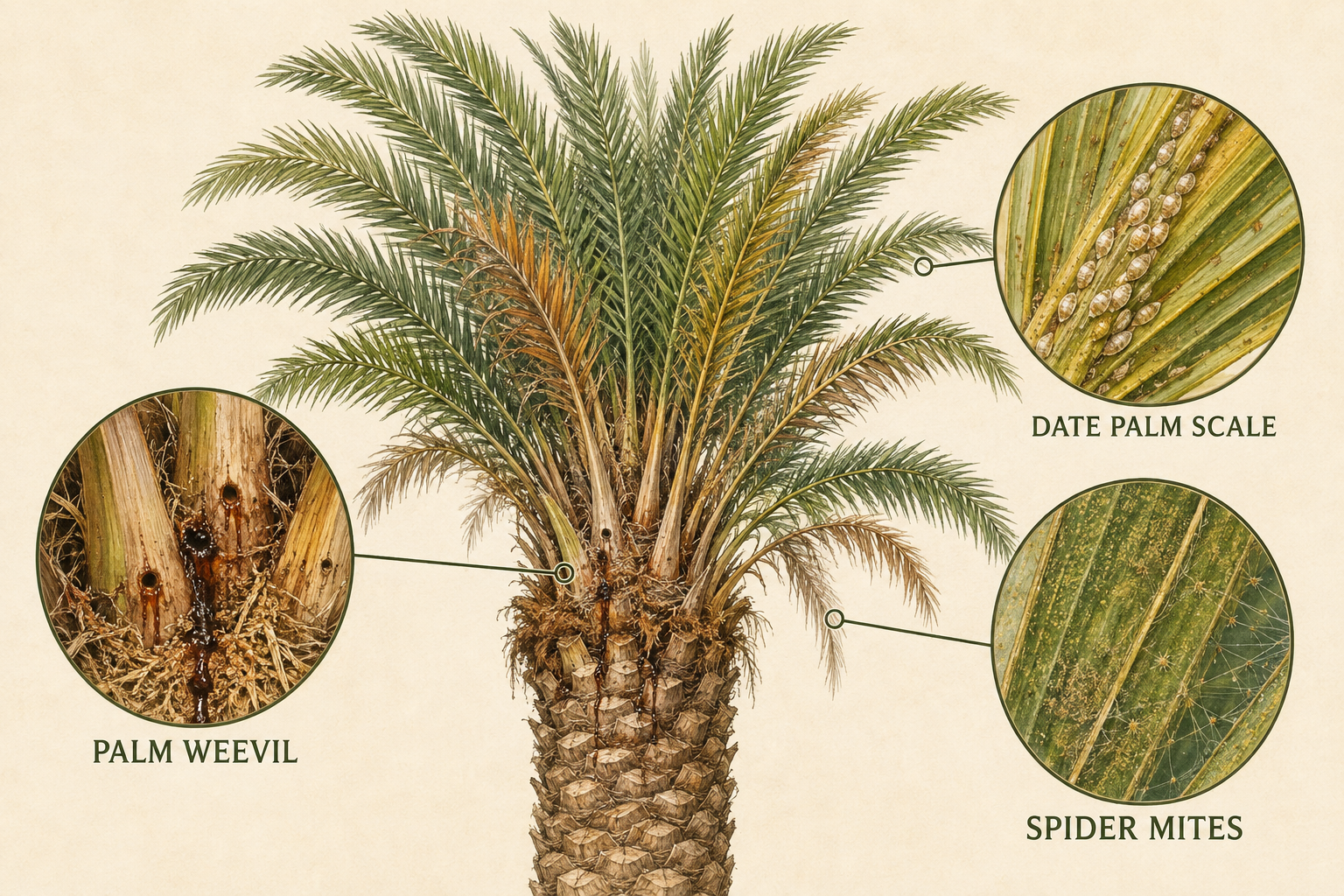
Palm weevilsEntry holes, chewed fibers, fermenting odor, oozing, frass, crown decline or collapseUrgent: isolate debris; contact agricultural authorities and a licensed palm professional. Do not move suspect material.
Date palm scaleWhite/gray crusts on leaflets and rachis; yellowing and reduced vigorConfirm insect. Improve canopy access and treat only with a labeled horticultural oil or systemic program appropriate to site and life stage.
Spider mitesFine stippling, bronzing and webbing; worse under hot, dusty stressConfirm with hand lens. Correct dust/water stress; use a labeled miticide only when threshold and site justify it.
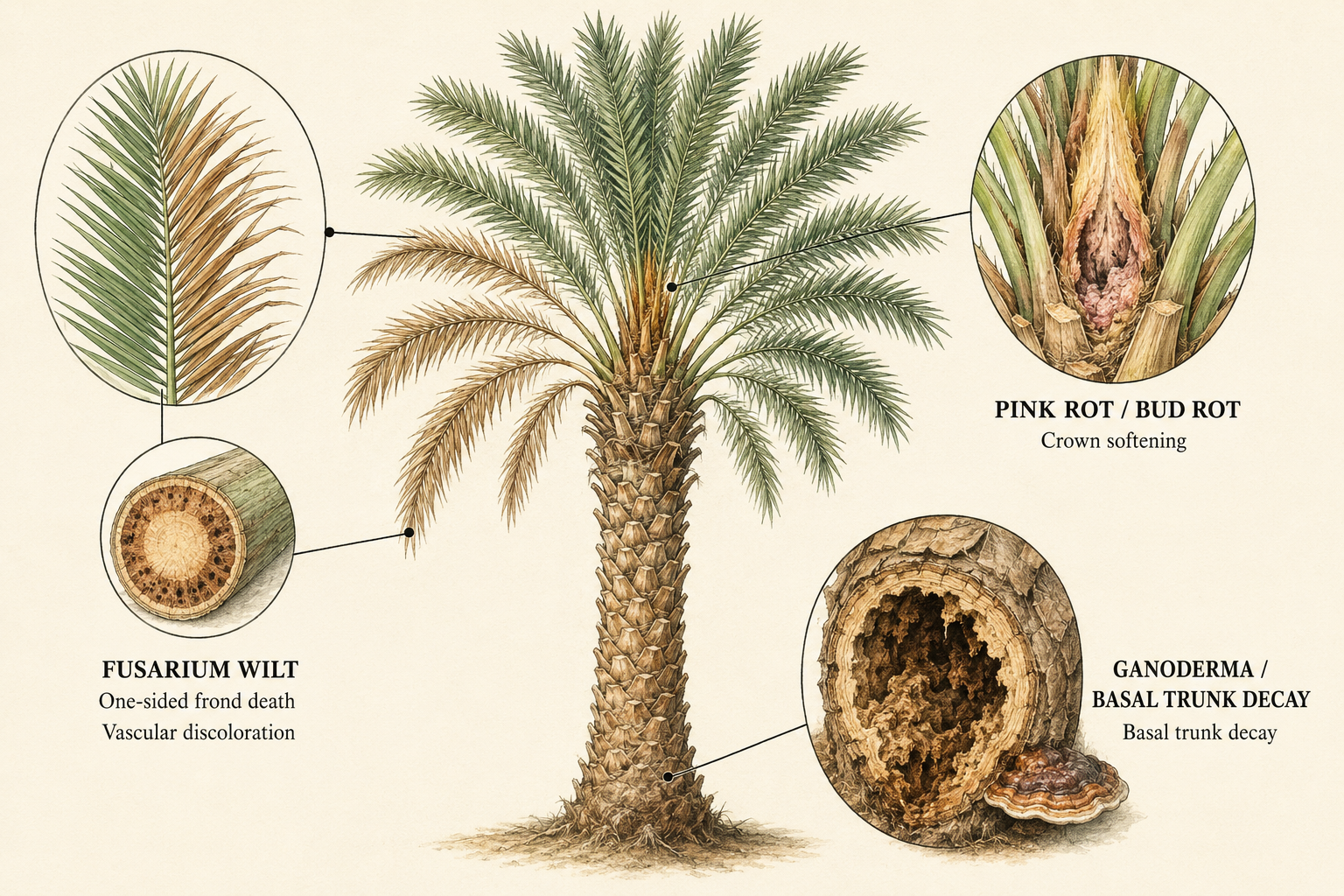
Fusarium wiltOne-sided leaflet death on a frond, progressing upward; brown/pink vascular discolorationNo curative fungicide. Confirm diagnostically, sanitize tools, contain debris and avoid replanting susceptible palms in contaminated soil.
Pink rot / bud rotSoft crown tissue, spear pull, rot, odor; often follows injury or stressKeep crown dry, stop wounding and obtain diagnosis quickly. A labeled fungicide may protect only when organism and timing are correct.
Ganoderma / basal decayLower-trunk decay, canopy decline; conks may develop near baseNo cure. Restrict access near unstable palms, obtain risk assessment and remove safely when indicated.
Nutrient disorderPatterned chlorosis, marginal necrosis, frizzle or reduced leaf sizeDo not guess from one frond. Review soil, water, fertilizer history and tissue analysis; correct with a complete palm nutrition program.
Water/root stressGeneral wilt, stalled spear, sour soil, chronic saturation or a root ball that dries while surrounding soil is wetExpose and inspect irrigation pattern, drainage and root-ball moisture. Correct water delivery before applying pesticides.
Always follow the pesticide label—it is the law. Product registration, invasive-pest reporting and permitted treatments vary by state. When crown collapse, trunk decay or structural instability is possible, establish an exclusion zone first.
BIOSECURITY
Tools can move disease faster than symptoms appear.
- Disinfect cutting tools between every palm
- Do not move suspicious soil, trunks or frond debris
- Prune healthy palms before suspect palms
- Protect the terminal bud from cuts and retained moisture
- Record photos, dates, irrigation and treatment history
- Use diagnostic labs when wilt or lethal disease is suspected
START WITH THE SPECIFICATION
Bring us the project. We’ll bring the experience.
Share the cultivar, quantity, clear-trunk height, destination and delivery window. We’ll help define the right material and plan the move.